
3D model
The beehive scale is modelled in code, like the Robotic Beehive. One parametric three.js file describes the case, the load cell, the electronics pod and the cables. The interactive viewer on the overview page and the downloadable beehive-scale.glb are both generated from it.
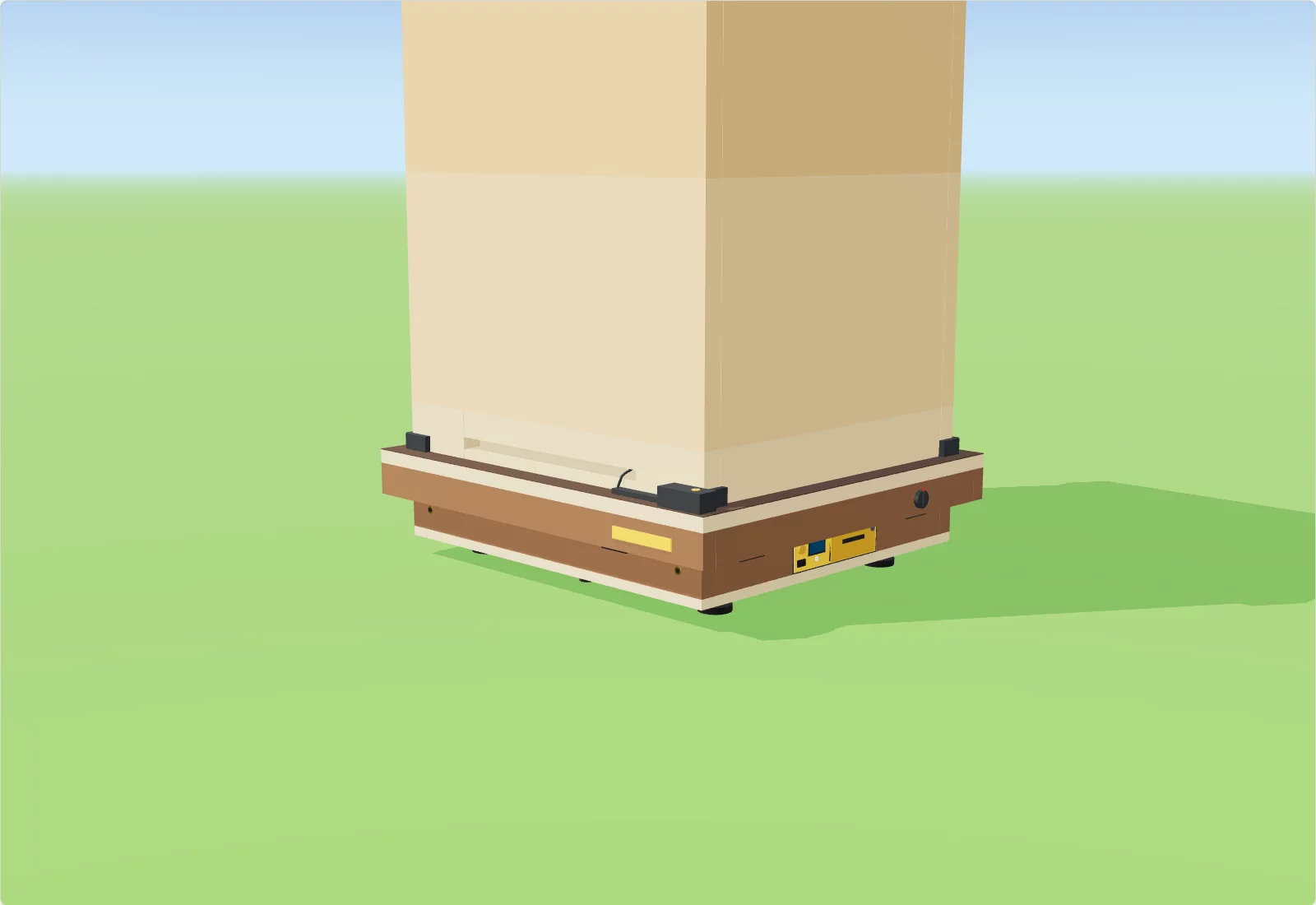
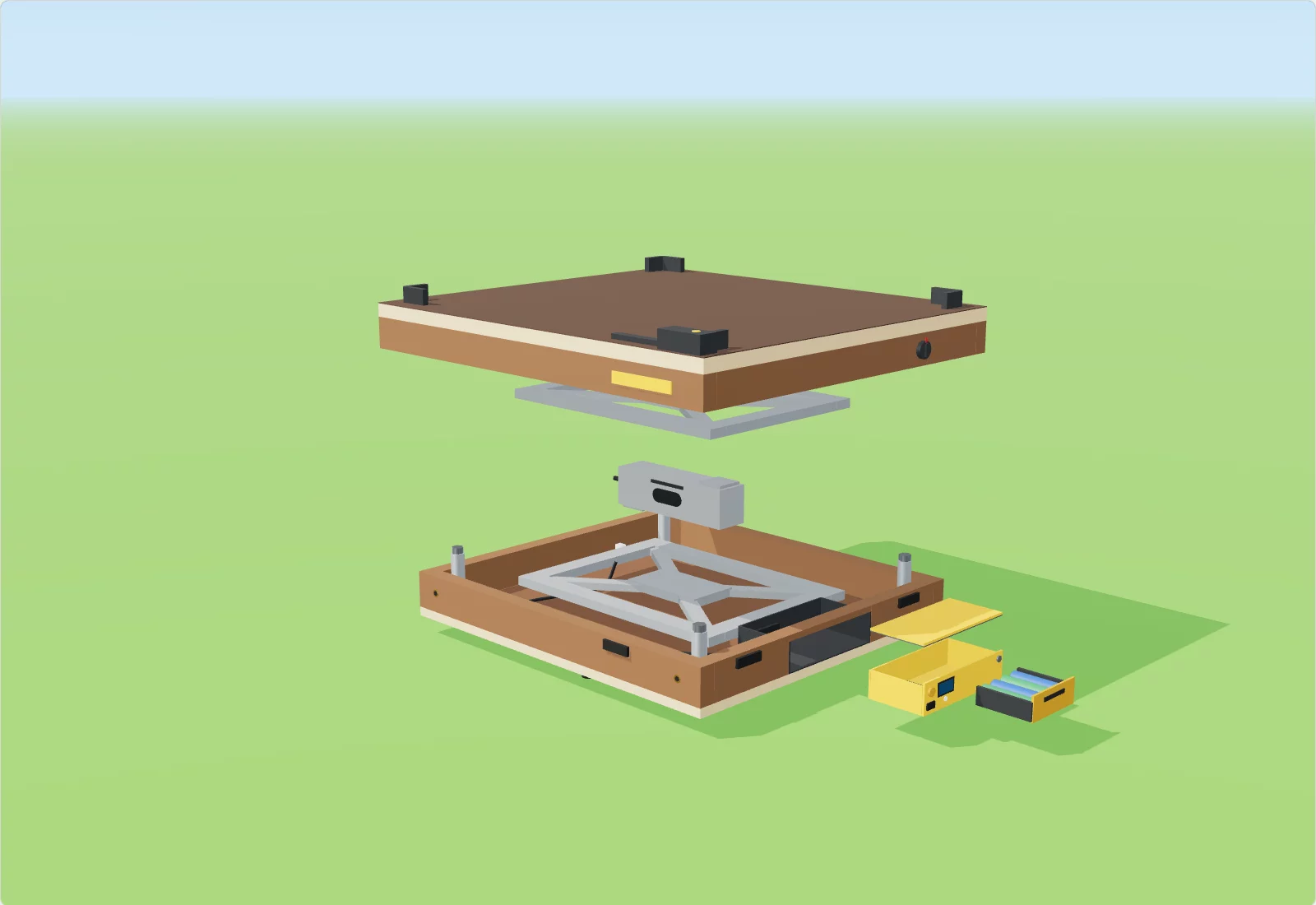
What is modelled
| Assembly | Parts |
|---|---|
| Scale | Film-faced plywood deck with thermo-pine skirt, printed hive locators and transport lock; upper and lower AP62AFB weighing brackets; single-point load cell; plywood and thermo-pine base with drain holes, overload stops, side bumpers, printed pod-bay sleeve, sensor louvres, Observer mounting inserts, the recessed M12 accessory connector and the internal harness; levelling feet |
| Electronics pod | ASA shell and lid, face with OLED window, button, USB-C flap and vent; slide-out battery cartridge with 2–4 cells; carrier PCB with ESP32-S3 module, HX711, charger, LoRa footprint; dock connector |
| Hive climate probe | Sensor port in the front-right hive locator, probe groove along the deck, SHT45 probe in through the entrance, and the service loop from the port down inside the skirt to the base |
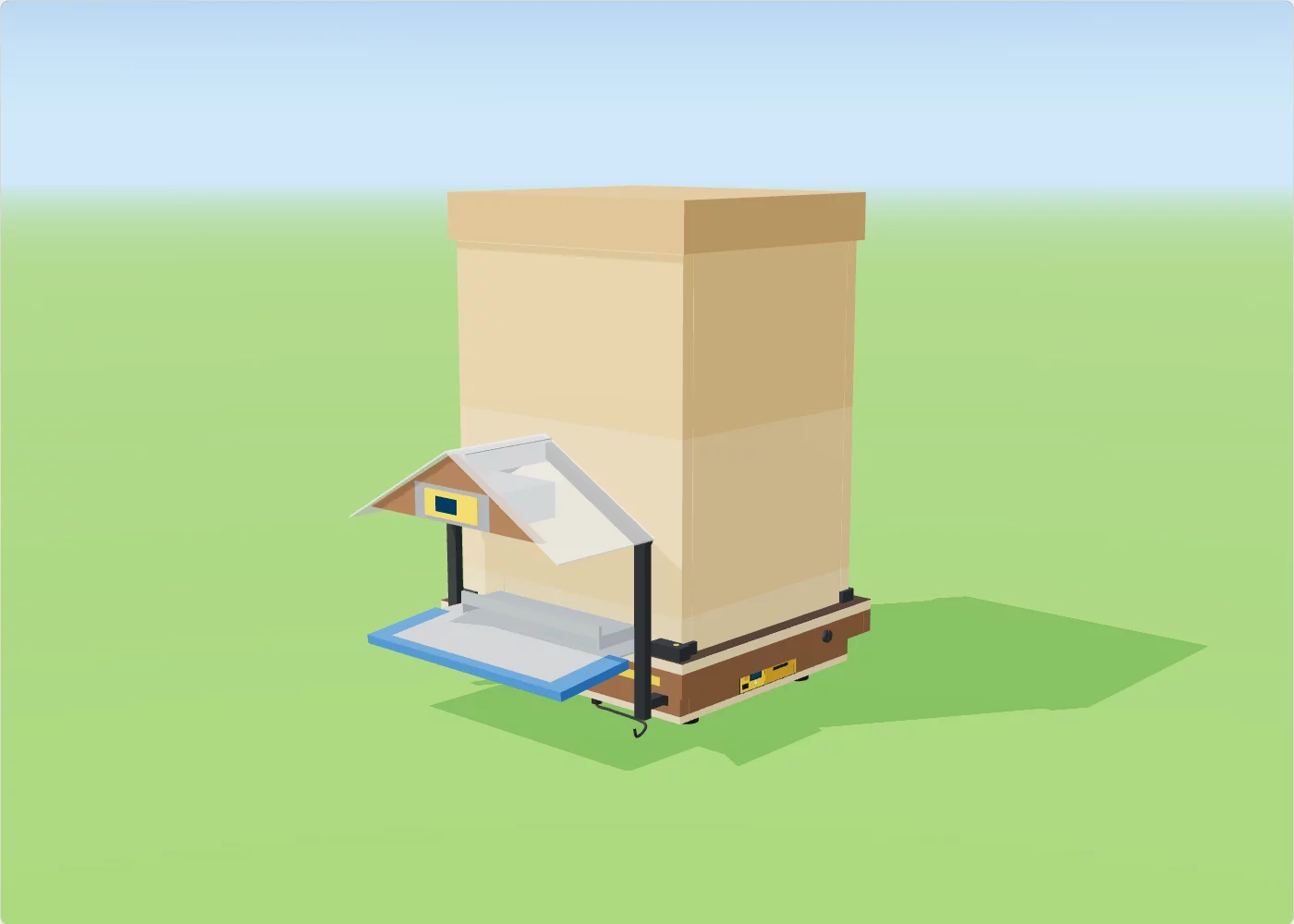
| Entrance Observer | Simplified from its own model: wall frame on risers bolted to the scale base, porch, landing board, gable roof and camera pod, and the M12 lead to the scale |
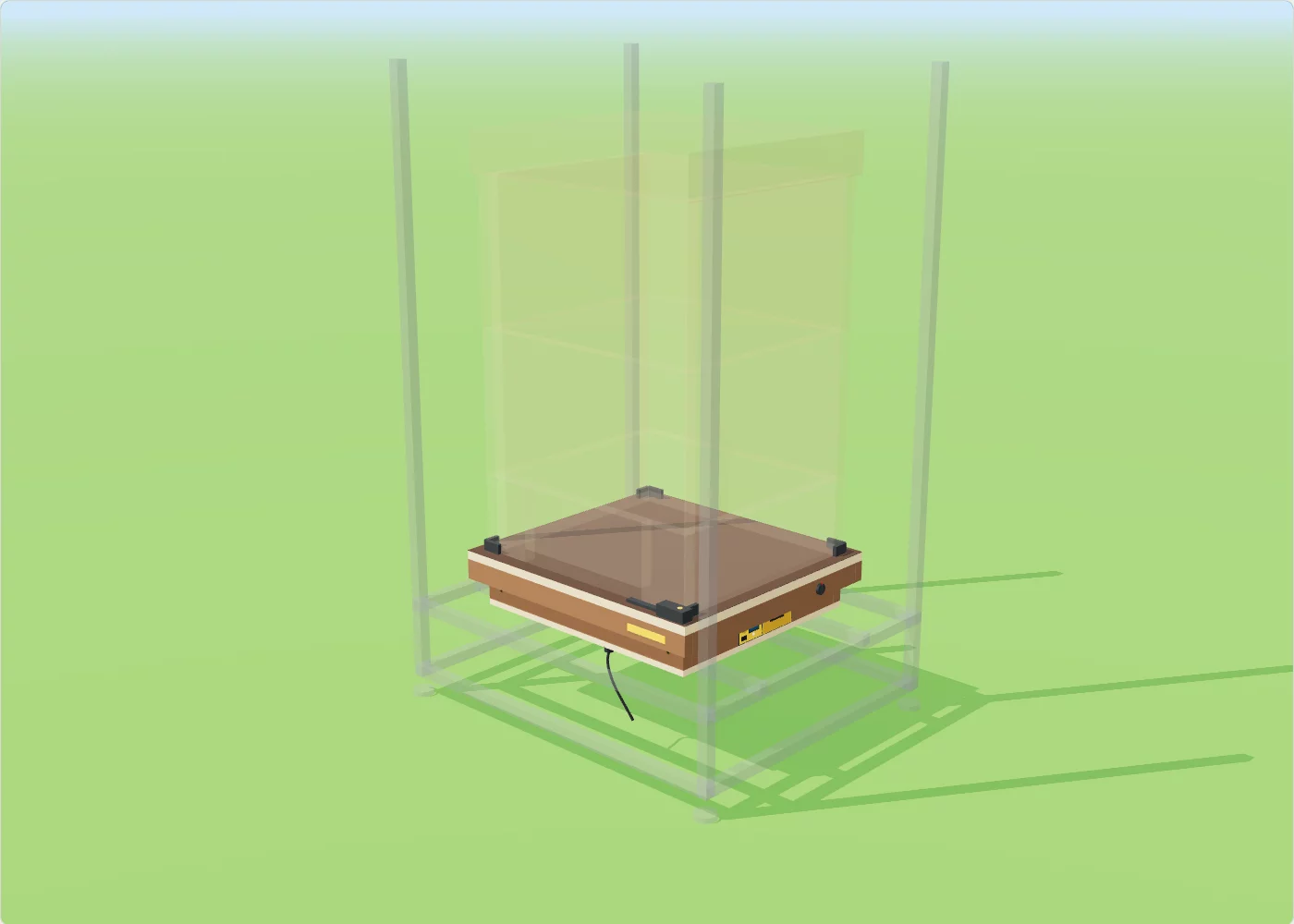
| Context | A 2-box Estonian hive (ghost, solid or hidden), or the Robotic Beehive plinth with posts, rings and deck cross members |
Every part carries a short note (what it is, why it is there, how it is serviced), which the viewer shows on hover and the GLB stores as glTF extras. The GLB also contains an explode animation clip.
Stand-alone, with the Entrance Observer and in the Robotic Beehive
The model uses the same axes and hive dimensions as robotic-beehive/model/hive-model.js: X across the frames, Y up, Z towards the entrance. With Entrance Observer bolts the Observer to the front of the base, with the same numbers the Observer model uses for the scale (deck 560 × 510 mm, stack 112 mm, feet 25 mm), so the two models agree. The Stands on → Robot switch removes the feet, bolts the scale to the robot's plinth cross members on the shared 400 × 300 mm hole pattern, and plugs the robot harness into the accessory connector. The pod stays in its bay.
Build it
The source is in Gratheon/beehive-sensors/model.
cd model
npm install          # first time only
npm run build        # beehive-scale.glb + index.html (opens from disk, works offline)
npm run preview      # renders docs/preview*.png with headless Chrome
npm run website      # also updates the viewer on gratheon.com (../../gratheon.com)
| File | Role |
|---|---|
scale-model.js |
Parametric geometry, part notes, energy budget |
viewer.js, viewer.html, viewer.css |
Interactive viewer, scoped to .beehive-scale so it can be embedded |
export-glb.mjs |
Writes beehive-scale.glb with the exploded-view clip |
build-viewer.mjs |
Writes index.html; with --website it copies the bundle, CSS and GLB into gratheon.com and refreshes the beehive-scale embed blocks |
render-preview.mjs |
Product images for the README and the website |
Parameters to confirm
The AP62AFB cell and bracket sizes come from the supplier listing (bracket ≈ 341.8 × 254.2 mm). Measure the delivered part and update cell and bracket in DEFAULTS before the deck and base drawings are released. The scale height, overload-stop gap and deck skirt overlap all follow from these values.
Earlier model
The first enclosure concept was drawn in TinkerCad.