
Worldwide, several interdisciplinary research teams work on precision beekeeping and computational apidology on a recurring basis. The list below is based on repeated appearances in the Gratheon research-paper library, not on citation counts. One-off paper authors are intentionally excluded.
Portraits are included only when they are published by official university or lab pages. Rows without a reliable official portrait source stay text-only to avoid using personal or unofficial photos.
| Team / university | Recurring people | Evidence in the local library | Main areas |
|---|---|---|---|
| 🇩🇪 Freie Universität Berlin, Dahlem Center for Machine Learning and Robotics / University of Konstanz, Centre for the Advanced Study of Collective Behaviour |




|
~9 papers around FU Berlin, plus Konstanz follow-up work | Waggle-dance decoding, lifetime tracking of tagged bees, social-network analysis, in-hive robotics, Landgraf Lab, COMB modular robot platform |
| 🇱🇻 Latvia University of Life Sciences & Technologies, Faculty of Engineering and Information Technologies | Aleksejs Zacepins, Vitalijs Komasilovs, Armands Kviesis, Valentina Komasilova | ~8 papers | Precision-beekeeping systems, hive scales, temperature/sound/weight sensors, ESP-NOW and GSM/GPRS telemetry, data warehouses, apiary-location and GIS support |
| 🇨🇿 Brno University of Technology, Faculty of Information Technology | Simon Bilik, Adam Ligocki, Karel Horak, Tomas Zemcik, Lukas Kratochvila | ~7 papers | Computer vision for bee and Varroa detection, hyperspectral / narrow-spectrum imaging, Raspberry Pi monitoring hardware, surveys of ML in beehive monitoring |
| 🇺🇸 Utah State University, School of Computing | Vladimir Kulyukin, Anastasiia Tkachenko, Aleksey V. Kulyukin, Sarbajit Mukherjee | ~6 papers | BeePi datasets, continuous electronic beehive monitoring, audio/image/video/weather datasets, hive entrance traffic, BeePIV, energy-efficient object inference |
| 🇵🇷 University of Puerto Rico at Mayagüez | Rémi Mégret, José L. Agosto, Tugrul Giray, Ivan Rodriguez, Edgar Acuña | ~5 papers | BigDBee / LabelBee, entrance-video annotation, multi-animal tracking, pollen-bearing bee recognition, honeybee re-identification datasets |
| 🇦🇹 University of Graz, Artificial Life Lab + 🇨🇿 Czech Technical University, Center for Machine Perception consortium |
|
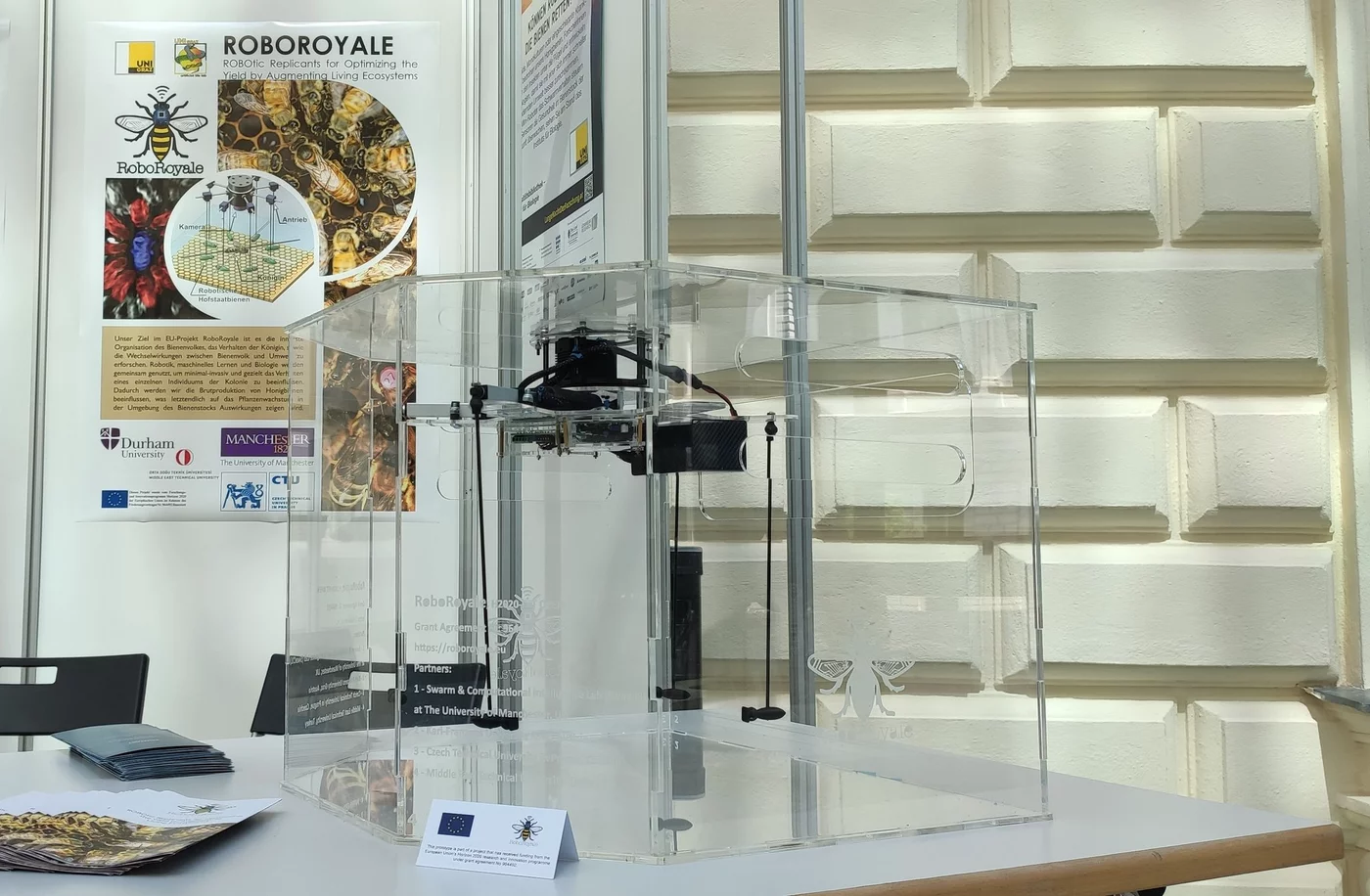
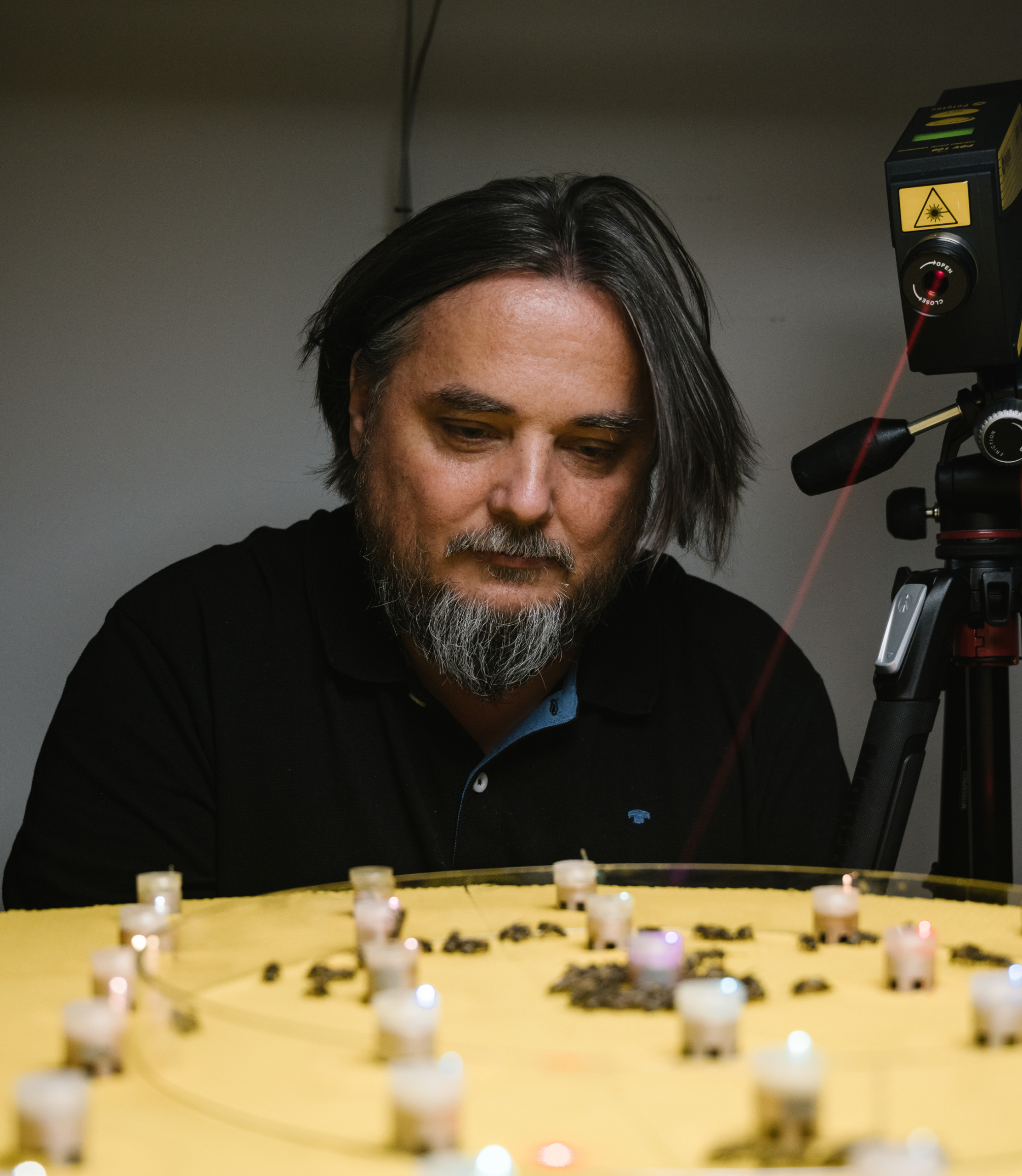
~4 Graz papers, ~3 CTU consortium papers | RoboRoyale, Hiveopolis, autonomous in-hive robotics, queen-behaviour tracking, robotic comb mapping, bio-hybrid ecosystem interventions |
| 🇩🇪 Karlsruhe Institute of Technology | Frederic Tausch, Jan Wagner, Simon Klaus | ~3 KIT papers, plus apic.ai outputs | apic.ai, DeepBees, scalable visual hive monitoring, edge/cloud bee tracking pipelines, pollinators as computer-vision data collectors, ecotoxicology monitoring |
| 🇱🇹 Vilnius Gediminas Technical University | Tomyslav Sledevič, Artūras Serackis, Dalius Matuzevičius | ~3 papers | Hive-entrance computer vision, bee detection and direction datasets, keypoint-based orientation estimation, fanning-behaviour detection |
| 🇨🇦 Institut National de la Recherche Scientifique / Université Laval | Mahsa Abdollahi, Yi Zhu, Tiago H. Falk, Ségolène Maucourt, Pierre Giovenazzo | 2 dataset papers | Longitudinal acoustic and multi-sensor datasets, phenotypic trait measurements, urban beehive monitoring benchmarks, Nectar Technologies |
| 🇯🇵 Okinawa Institute of Science and Technology, Biological Physics Theory Unit / 🇳🇱 Vrije Universiteit Amsterdam | Katarzyna Bozek, Alexander S. Mikheyev, Greg J. Stephens | 2 high-impact tracking papers | Markerless full-colony tracking, dense object tracking on comb, brood-cell and bee-position inference from long-term observation-hive video |
Notes
- Groups are ranked primarily by repeated presence in the local Gratheon paper library and secondarily by direct relevance to Gratheon products.
- Shared consortium projects are grouped together when the same research programme appears across multiple institutions.
- General-purpose animal-pose-estimation labs are not listed unless their work is repeatedly connected to honeybee monitoring in the library.